Ice Water for Your Face: Does the Viral Beauty Ritual Really Reduce Wrinkles?
If you’ve spent any time on TikTok, Instagram or YouTube recently, you’ve probably seen someone plunging their face into a bowl of ice water first thing in the morning.
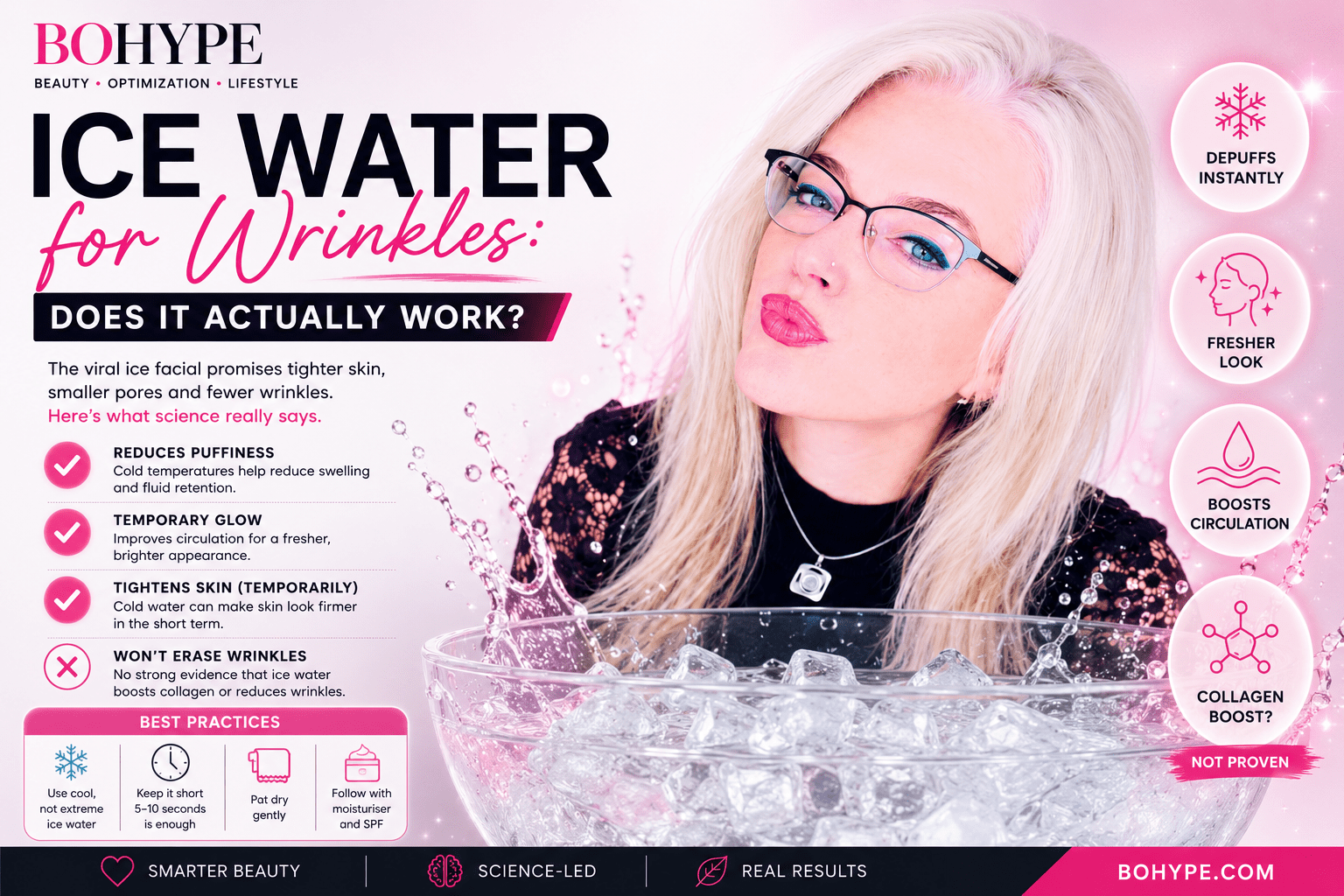
This simple ritual—often called the ice facial or ice water plunge—has become one of the biggest beauty trends online. Influencers claim it tightens the skin, reduces wrinkles, shrinks pores, boosts collagen and leaves your complexion looking younger.
But how much of this is actually backed by science?
Let’s separate fact from fiction.
What Is the Ice Water Ritual?
The ice water ritual involves immersing your face in very cold water, usually with several ice cubes, for a few seconds at a time. Some people repeat this several times, while others simply splash their face with cold water.
Although it has become popular thanks to social media, cold water has been used in beauty routines for centuries. Many cultures have long believed that cold water refreshes the skin, improves circulation and reduces swelling.
The question is: does it really work?
What Happens to Your Skin in Cold Water?
When your skin is exposed to cold temperatures, your blood vessels temporarily narrow. This process is called vasoconstriction.
By reducing blood flow to the surface of the skin, your body helps conserve heat.
Once your face begins to warm up again, those blood vessels widen—a process known as vasodilation. Fresh, oxygen-rich blood returns to the skin, which can leave your complexion looking brighter and healthier.
This temporary increase in circulation is one reason many people notice an immediate glow after using cold water.
Can Ice Water Reduce Puffiness?
Yes—and this is probably its biggest proven benefit.
Cold temperatures help reduce swelling by limiting fluid build-up beneath the skin.
That’s why many people reach for chilled eye masks, refrigerated spoons or cold compresses after a poor night’s sleep.
If you’ve woken up with puffy eyes after eating salty food, drinking alcohol or sleeping badly, cold therapy can noticeably reduce swelling within minutes.
While the effect isn’t permanent, it can make you look more refreshed.
Does Ice Water Remove Wrinkles?
This is where social media often gets carried away.
The short answer is no.
Ice water cannot erase wrinkles or reverse skin ageing.
It doesn’t stimulate enough collagen production to smooth fine lines, nor does it repair existing sun damage.
What it can do is temporarily tighten the outer layers of the skin.
As the skin cools, it contracts slightly, making fine lines appear less noticeable for a short period. This creates the illusion of firmer skin, but the underlying structure hasn’t changed.
Think of it as a temporary cosmetic effect rather than a long-term anti-ageing treatment.
Does It Boost Collagen?
One of the most common claims is that ice water stimulates collagen production.
At the moment, there is no strong scientific evidence to support this.
Collagen is produced by specialised cells called fibroblasts, located deep within the dermis.
Collagen production is influenced by factors such as:
Age
Genetics
Sun exposure
Nutrition
Hormones
Sleep
Smoking
Certain skincare ingredients such as retinoids and peptides
Simply splashing your face with ice water isn’t enough to activate significant collagen synthesis.
Can Ice Water Shrink Your Pores?
Another popular myth is that cold water “closes” your pores.
In reality, pores don’t have muscles.
That means they cannot physically open or close.
Cold temperatures may make pores appear smaller because the surrounding skin becomes slightly tighter and oil production is temporarily reduced.
However, your actual pore size remains exactly the same.
Can It Calm Redness?
Sometimes.
If redness is caused by heat or temporary inflammation, cold temperatures may help calm the skin.
However, people with rosacea or highly sensitive skin should be careful.
Very cold temperatures can sometimes trigger flare-ups rather than improve them.
If your skin is easily irritated, cool water is usually a better choice than ice.
Is Putting Ice Directly on Your Skin Safe?
Not always.
One mistake frequently seen on social media is rubbing ice cubes directly onto bare skin.
This can be too harsh, especially for sensitive skin.
Prolonged exposure to ice may damage the skin barrier or even cause a mild cold burn.
A safer alternative is to use:
Cool water
A chilled facial roller
A refrigerated gua sha tool
A cool compress wrapped in a soft cloth
You don’t need freezing temperatures to enjoy the refreshing effects.
What Actually Helps Prevent Wrinkles?
If your goal is healthier, younger-looking skin, there are far more effective habits than an ice bath.
Science consistently supports:
Wearing broad-spectrum sunscreen every day
Using retinoids or retinal in the evening
Applying vitamin C in the morning
Keeping your skin well hydrated
Eating a balanced diet rich in antioxidants
Getting enough quality sleep
Exercising regularly
Avoiding smoking
Managing stress
These lifestyle habits have a much greater impact on skin ageing than occasional cold exposure.
So, Is the Ice Water Ritual Worth Trying?
Yes—but with realistic expectations.
If you enjoy the refreshing sensation and love how it reduces morning puffiness, there’s no reason not to include it in your routine.
Just don’t expect it to erase wrinkles or replace a good skincare routine.
Like many beauty trends, the ice water ritual contains a grain of truth mixed with a lot of exaggeration.
The real secret to healthy, youthful-looking skin isn’t found in a bowl of ice.
It’s found in consistency.
Protect your skin from the sun, nourish it with evidence-based skincare, prioritise sleep, eat well and support your body’s natural repair processes.
Sometimes the simplest habits really are the most powerful.
At BOHYPE, we love exploring the science behind viral beauty trends. Some stand up to scientific scrutiny, while others are more myth than miracle.
The ice water ritual sits somewhere in the middle. It can certainly leave your skin looking fresher, brighter and less puffy—but it’s not a substitute for a healthy lifestyle or a well-formulated skincare routine.
Understanding why something works is just as important as knowing whether it works. That’s what evidence-based beauty is all about.