How to Use HIFU at Home Safely: Age, Frequency, Mistakes & Best Areas
Home HIFU devices are becoming increasingly popular, promising firmer skin, improved facial contours and a more youthful appearance—all without visiting a clinic.
Some people love their results.
Others end up disappointed because they expect too much.
And unfortunately, some experience irritation or unwanted side effects simply because they don’t know how to use these devices correctly.
The truth is that HIFU can be a useful skincare tool when used appropriately, but it’s not a miracle treatment, and it certainly isn’t risk-free.
Here’s everything you need to know before adding a home HIFU device to your beauty routine.
What Is HIFU?
HIFU stands for High-Intensity Focused Ultrasound.
It uses focused ultrasound energy to gently heat specific layers beneath the skin, encouraging the body’s natural healing response and stimulating collagen production.
As collagen gradually rebuilds, skin may become firmer, tighter and more lifted over time.
Unlike lasers or microneedling, HIFU works beneath the skin’s surface without breaking the outer layer.
Home HIFU vs Professional HIFU
One of the biggest misconceptions is that home HIFU devices are simply smaller versions of professional clinic machines.
They’re not.
Professional HIFU devices use much higher energy levels and are capable of reaching deeper tissue layers.
Home devices are intentionally designed with lower energy output to improve safety.
Most home HIFU devices are intended to:
- Support collagen production
- Improve mild skin laxity
- Help maintain results over time
- Complement a good skincare routine
What they won’t do is produce the dramatic lifting effect that some professional treatments can achieve.
The improvements are generally subtle and gradual.
What Age Should You Start Using HIFU?
This is one of the most common questions.
Social media has created enormous pressure to begin anti-ageing treatments at increasingly younger ages.
In reality, most young adults simply don’t need them.
Home HIFU generally makes the most sense for people beginning to notice early skin laxity, rather than trying to prevent ageing before it even starts.
For many people, this tends to be during their:
- Late twenties
- Thirties
- Forties
If you’re still in your late teens or early twenties and your skin is naturally firm, HIFU is unlikely to provide meaningful benefits.
In some cases, unnecessary tightening treatments may even reduce facial fullness, making the face appear older rather than younger.
Which Areas Can You Treat?
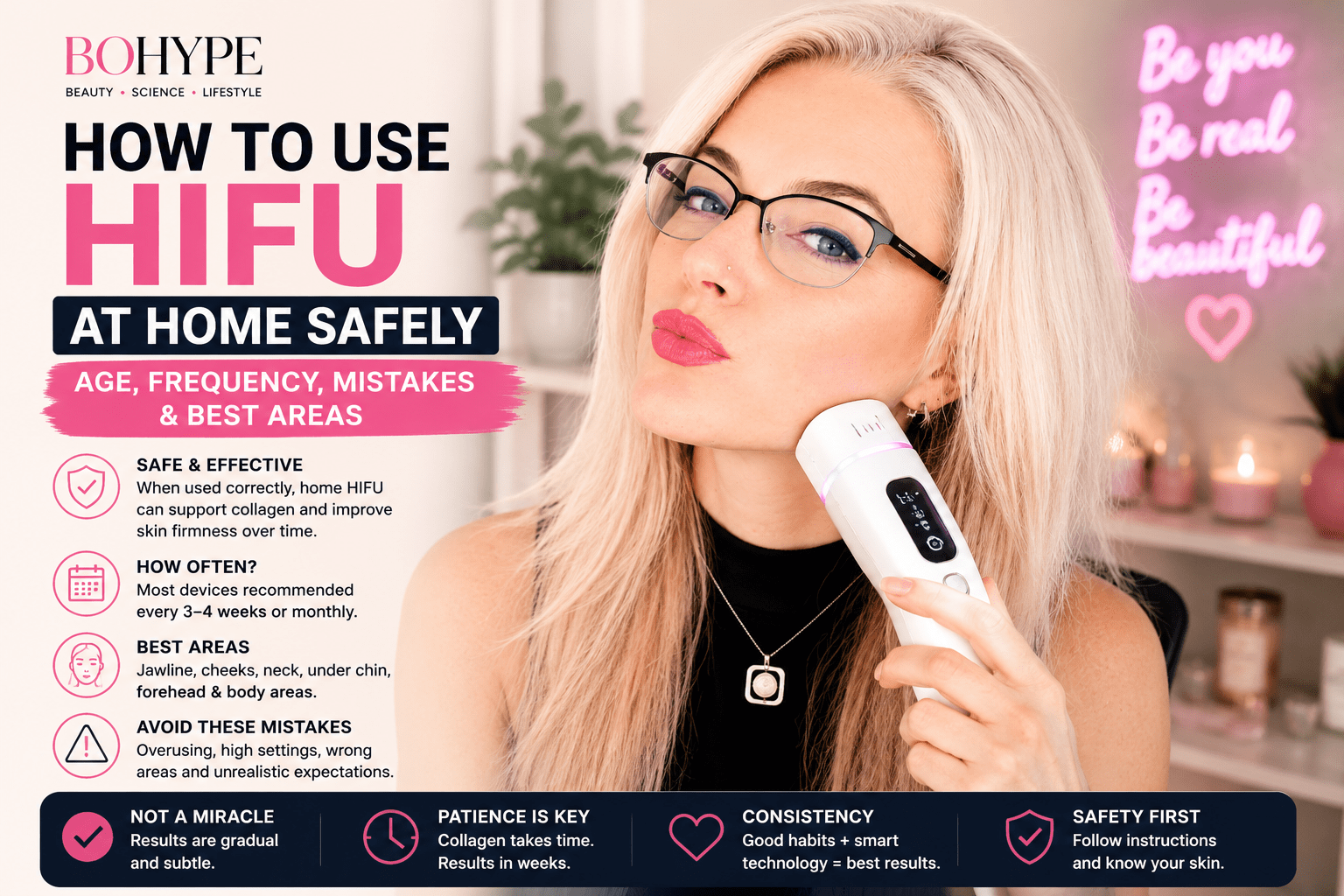
Most home HIFU devices are designed for areas such as:
- Jawline
- Lower cheeks
- Neck
- Under the chin
- Forehead (if approved by the manufacturer)
Some devices are also intended for body treatments, including:
- Abdomen
- Upper arms
- Thighs
- Above the knees
- Waistline
However, not every device is suitable for every area.
Always follow the manufacturer’s instructions.
Areas You Should Avoid
Certain areas should never be treated aggressively.
These include:
- Directly over the eyes
- Eyelids
- Lips
- Thyroid region
- Areas with very thin skin
- Bony areas with little soft tissue
- Suspicious moles or skin lesions
Energy-based devices should always be used carefully and only on approved treatment zones.
How Often Should You Use Home HIFU?
One of the biggest mistakes people make is assuming that more treatments produce faster results.
They don’t.
Collagen needs time to remodel.
Using HIFU too frequently won’t speed up collagen production and may simply increase irritation.
Most home devices recommend treatments:
- Every 3–4 weeks
- Or monthly for maintenance
Some lower-energy radiofrequency-HIFU combination devices may allow slightly more frequent treatments, but daily or weekly sessions are generally unnecessary.
Always follow the schedule recommended by your specific device manufacturer.
How Long Does It Take to See Results?
Patience is essential.
Some people notice a temporary feeling of tightness immediately after treatment.
However, this isn’t the final result.
New collagen takes time to develop.
Most improvements appear gradually over:
- 4 weeks
- 8 weeks
- Up to 12 weeks
This slow improvement is completely normal.
Healthy collagen cannot be rushed.
Possible Side Effects
Most people tolerate home HIFU well when used correctly.
Temporary side effects may include:
- Mild redness
- Swelling
- Tenderness
- Dryness
- Tingling
- Temporary sensitivity
- Mild discomfort during treatment
These effects usually settle within hours or a few days.
However, incorrect use increases the likelihood of complications.
Can Home HIFU Cause Fat Loss?
This topic receives a lot of attention online.
Professional HIFU treatments performed at high energy levels can sometimes contribute to unwanted fat reduction if used incorrectly or in unsuitable candidates.
Home devices are much less powerful, so the risk is significantly lower.
However, repeatedly treating the same area too aggressively—particularly if you already have a naturally slim face—may not be the best approach.
If your face already lacks volume, focus on maintaining healthy skin rather than chasing excessive tightening.
Who Should Be Careful?
Home HIFU may not be suitable for everyone.
Extra caution is advised if you have:
- Very thin facial fat
- Significant facial volume loss
- Extremely sensitive skin
- Active rosacea
- Eczema or psoriasis in treatment areas
- Active acne or skin infections
- Open wounds
- Certain autoimmune skin conditions
You should also seek professional advice before using HIFU if you have:
- Dermal fillers
- Thread lifts
- Metal implants near the treatment area
- Pacemakers or implanted medical devices
- Pregnancy (unless your healthcare provider advises otherwise)
When in doubt, speak with a qualified healthcare professional or dermatologist.
The Biggest Mistakes People Make
Many disappointing results come down to poor technique rather than the device itself.
Common mistakes include:
❌ Using the device too often.
❌ Starting with the highest energy setting.
❌ Treating the same area repeatedly.
❌ Buying poor-quality or counterfeit devices.
❌ Expecting surgical results from a home device.
❌ Following social media influencers instead of the manufacturer’s instructions.
Remember, online videos often use filters, ideal lighting and sponsored content.
Real results are usually much more subtle.
Is Home HIFU Worth It?
For the right person, home HIFU can be a useful maintenance tool.
It may help support collagen production, improve mild skin laxity and complement an overall skincare routine.
But it should never replace realistic expectations or healthy skin habits.
No device can compensate for:
- Daily UV damage
- Smoking
- Poor sleep
- Chronic stress
- Poor nutrition
Technology works best when it’s combined with a healthy lifestyle.
Home HIFU isn’t about chasing perfection.
It’s about supporting your skin as it naturally changes over time.
When used safely and according to the manufacturer’s guidelines, it can be a valuable addition to an evidence-based skincare routine.
Just remember:
Choose a reputable device.
Be patient.
Don’t overdo it.
Protect your skin with sunscreen.
And let collagen do what it does best—gradually.
Healthy ageing isn’t about looking twenty forever.
It’s about helping your skin stay as healthy, strong and resilient as possible at every stage of life.
At BOHYPE, we believe beauty technology should empower—not confuse.
Understanding how treatments work, who they’re suitable for and what results you can realistically expect is far more valuable than chasing viral trends.
When it comes to HIFU, safety, consistency and realistic expectations will always outperform shortcuts.