How to Replace Almost Every Gym Machine with Dumbbells at Home
You don’t need a fully equipped gym to build strength, improve muscle tone, and train your entire body.
With a pair of dumbbells—and, for a few exercises, a sturdy chair or sofa—you can recreate many of the basic movement patterns you would normally train on gym machines.
The key is choosing the right dumbbell exercise for the movement you want to train, rather than trying to copy a machine exactly.
Can Dumbbells Really Replace Gym Machines?
For most people, yes—especially when the goal is general strength, muscle development, fitness, and maintaining an active lifestyle.
Gym machines can make certain movements easier to stabilize and can be useful for beginners, rehabilitation, or specific bodybuilding goals. Dumbbells, however, offer something machines often don’t: freedom of movement and greater demand on your stabilizing muscles.
A simple pair of dumbbells can train your:
- Legs
- Glutes
- Hamstrings
- Back
- Chest
- Shoulders
- Arms
- Core
- Calves
And you can do it in a relatively small space.
The Complete Dumbbell Gym-Machine Replacement Guide
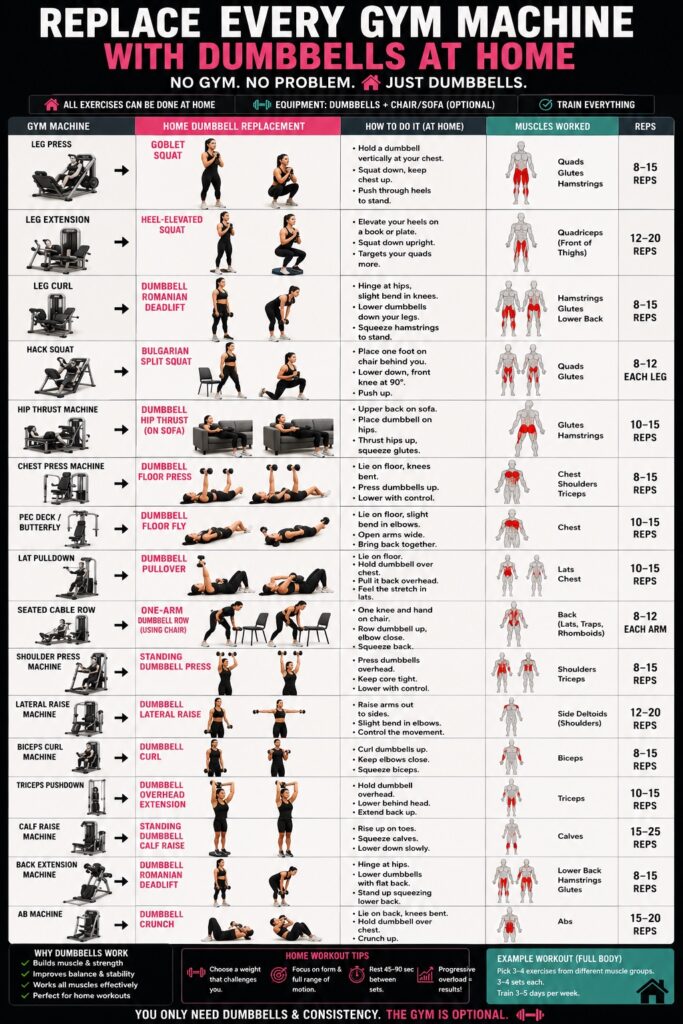
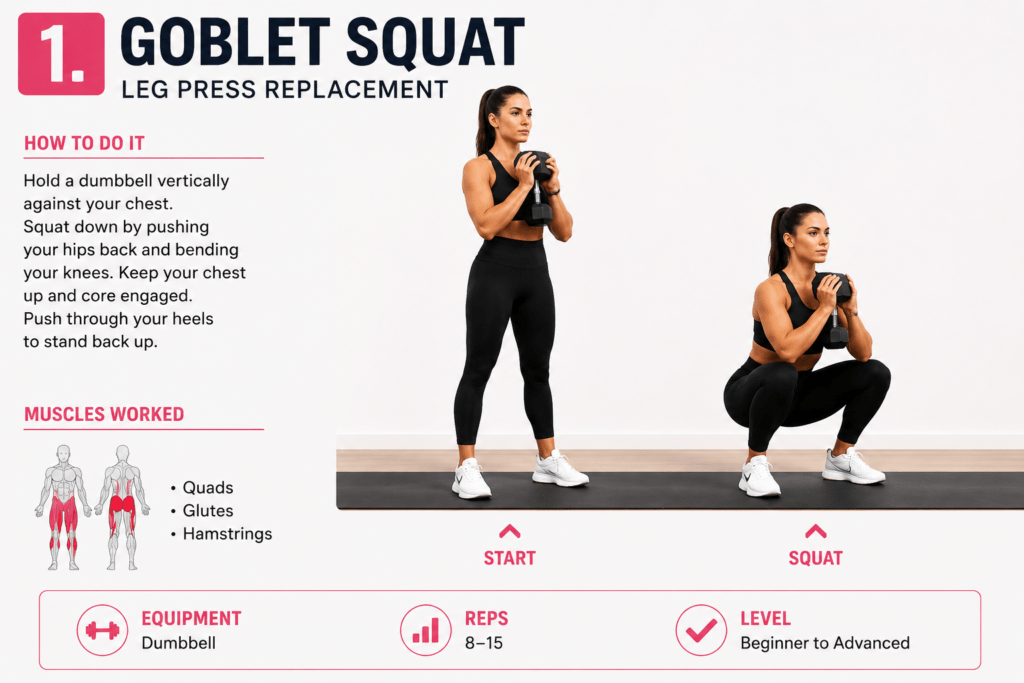
1. Leg Press → Goblet Squat
Hold one dumbbell vertically against your chest and squat down while keeping your torso controlled.
Main muscles: Quads, glutes, hamstrings
Suggested reps: 8–15
This is one of the easiest ways to train your lower body without a leg press.
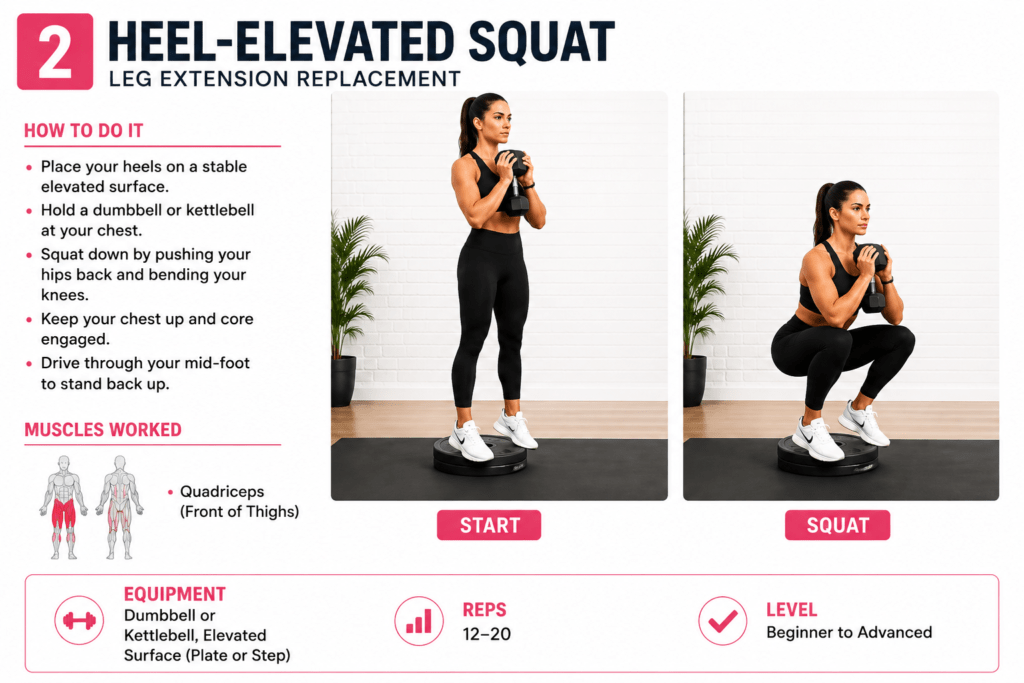
2. Leg Extension → Heel-Elevated Squat
Place your heels on a stable elevated surface and perform a controlled squat.
The heel elevation allows you to maintain a more upright position and can increase the emphasis on the quadriceps.
Main muscles: Quadriceps
Suggested reps: 12–20
Use a small, stable platform rather than an unstable object.
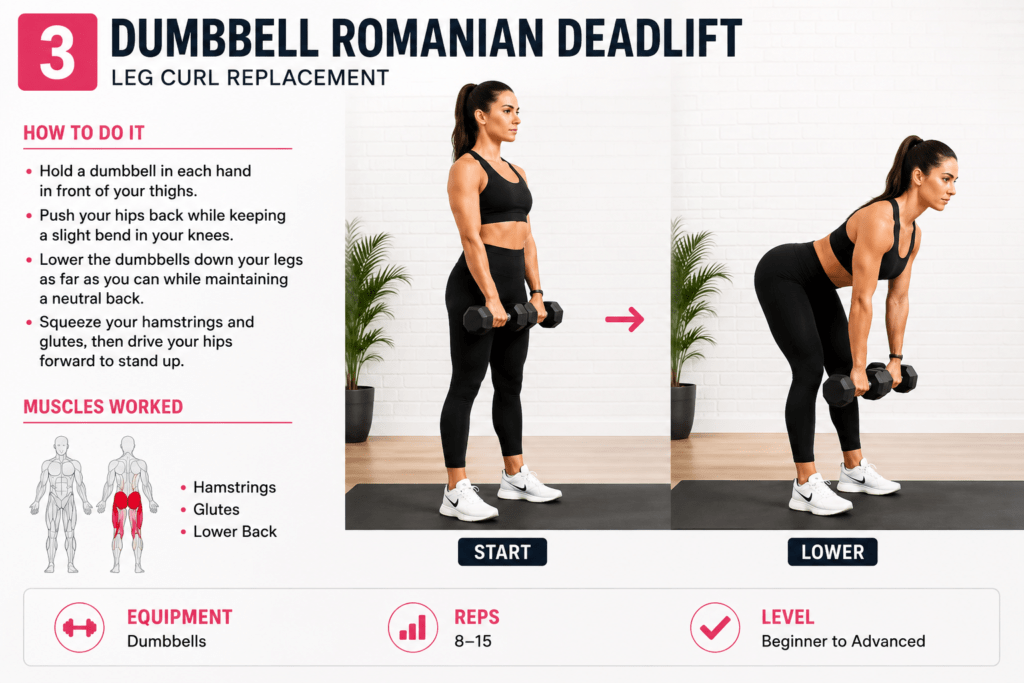
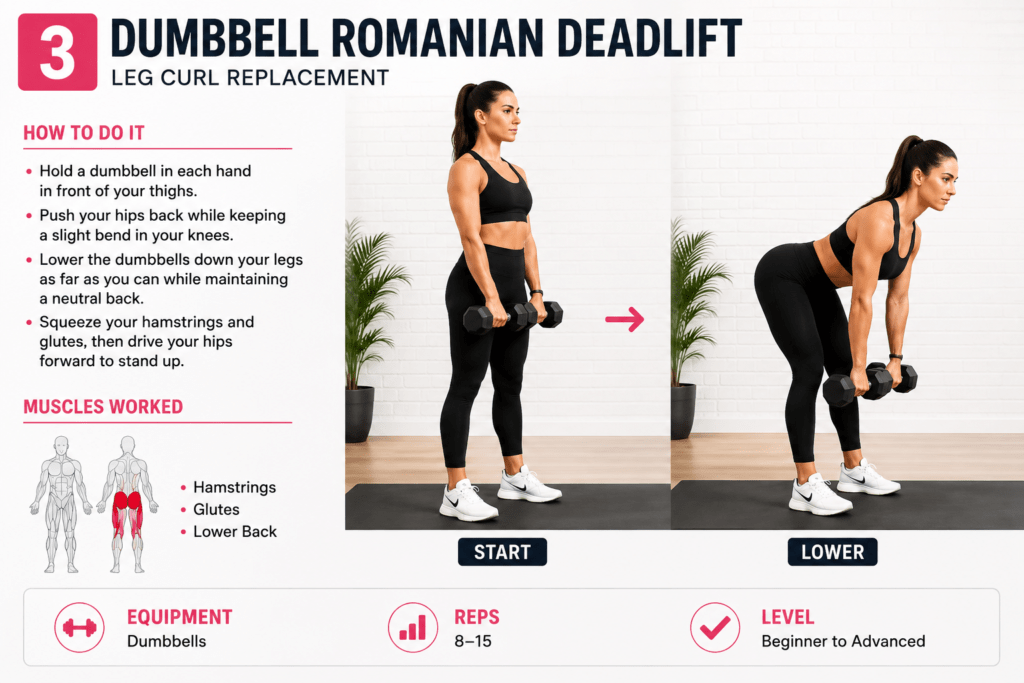
3. Leg Curl → Dumbbell Romanian Deadlift
The Romanian deadlift is an excellent dumbbell exercise for the posterior chain.
Hold the dumbbells in front of your legs, push your hips backward, slightly bend your knees, and lower the weights while maintaining a neutral back.
Main muscles: Hamstrings, glutes, lower back
Suggested reps: 8–15
Unlike a leg curl, the Romanian deadlift is a hip-hinge movement rather than a knee-flexion movement, so it isn’t a perfect one-to-one replacement—but it trains many of the same posterior-chain muscles.
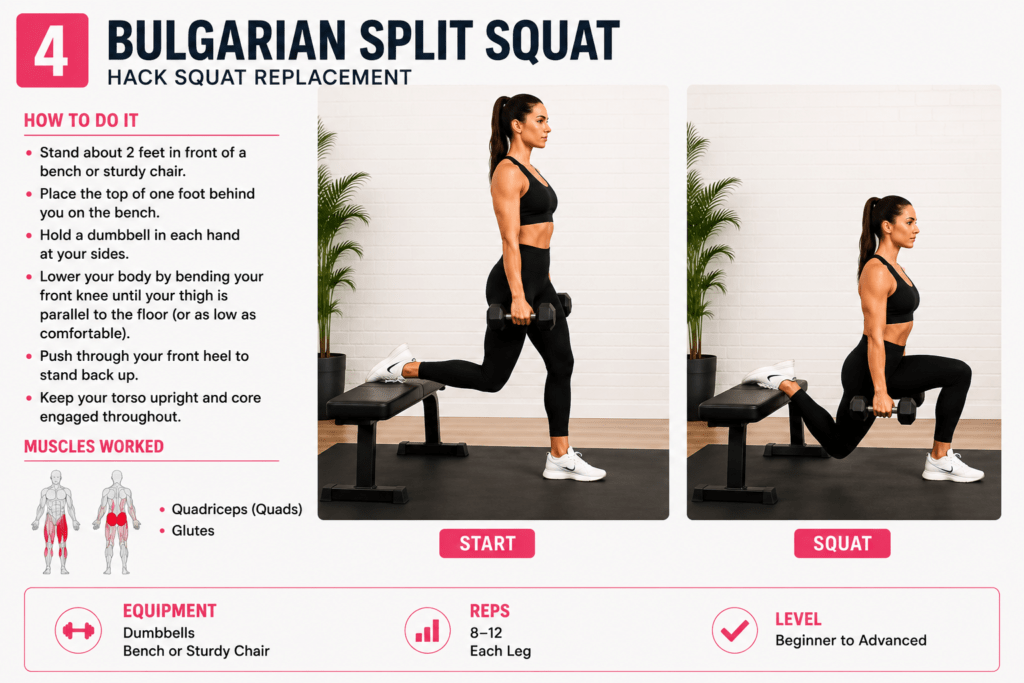
4. Hack Squat → Bulgarian Split Squat
Place your rear foot on a sturdy chair or bench and perform a split squat with your front leg doing most of the work.
Main muscles: Quads, glutes
Suggested reps: 8–12 per leg
This unilateral exercise can be surprisingly challenging with relatively light dumbbells.
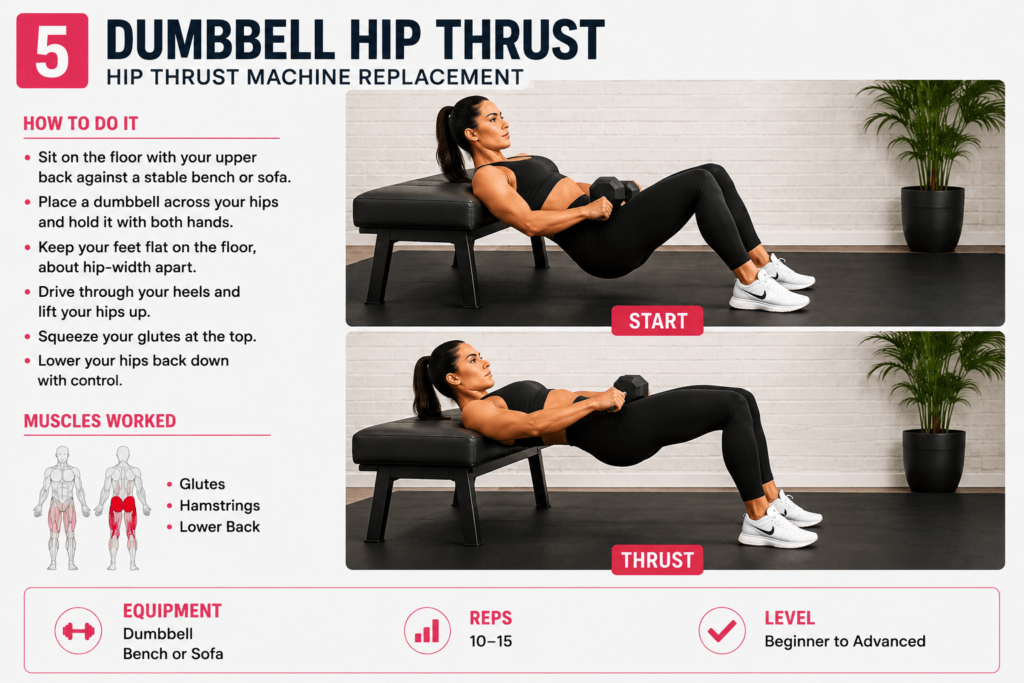
5. Hip Thrust Machine → Dumbbell Hip Thrust
Rest your upper back against a stable sofa or bench and place a dumbbell across your hips.
Drive your hips upward and squeeze your glutes at the top.
Main muscles: Glutes, hamstrings
Suggested reps: 10–15
Make sure the sofa or bench is stable before starting.
Chest & Back
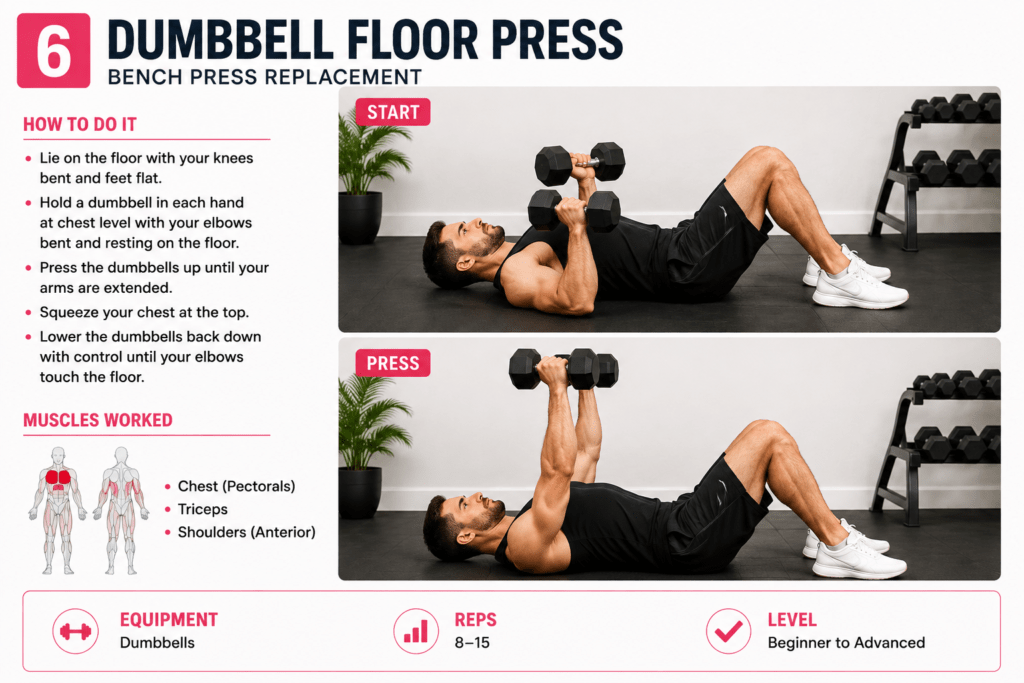
6. Chest Press Machine → Dumbbell Floor Press
Lie on the floor with your knees bent and press the dumbbells upward.
The floor limits the range of motion compared with a bench press, but it provides a very practical home alternative.
Main muscles: Chest, shoulders, triceps
Suggested reps: 8–15
Lower the dumbbells under control rather than dropping them toward the floor.
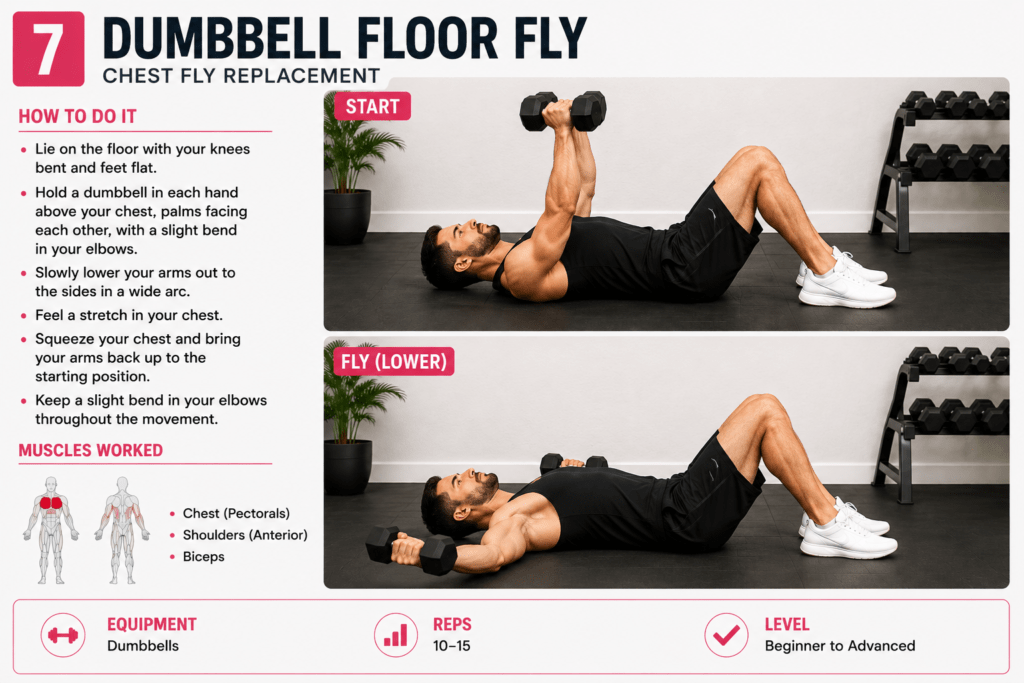
7. Pec Deck / Butterfly → Dumbbell Floor Fly
Lie on the floor with a slight bend in your elbows and bring the dumbbells together above your chest.
Main muscles: Chest
Suggested reps: 10–15
Keep the movement controlled and avoid using excessive weight. Dumbbell flies place considerable demand on the shoulder joint.
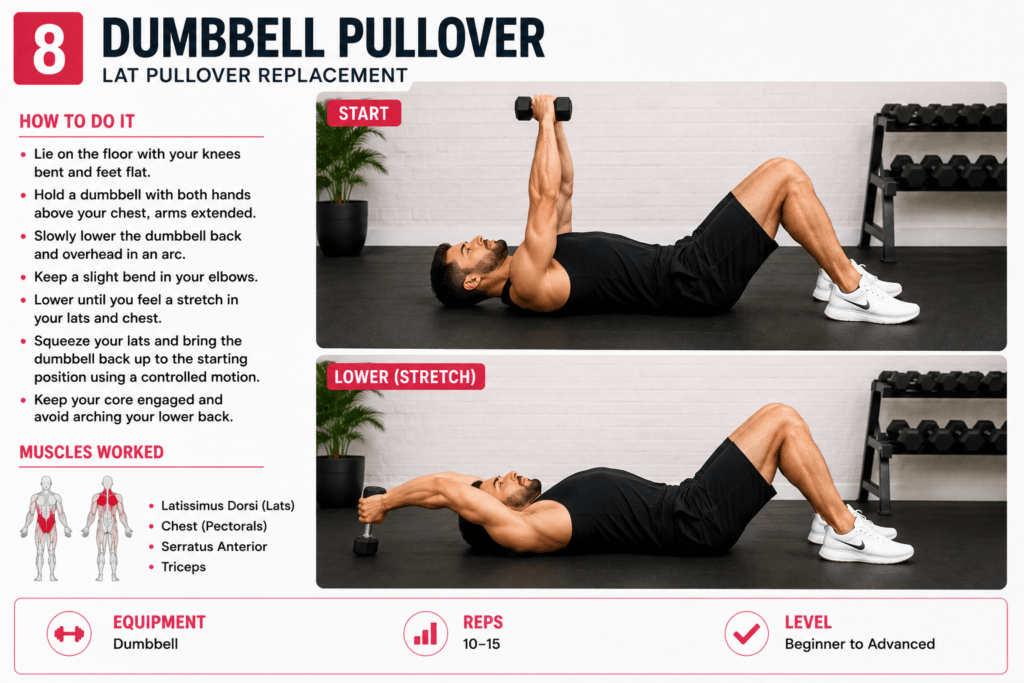
8. Lat Pulldown → Dumbbell Pullover
Lie on your back and hold one dumbbell above your chest. Slowly move it backward over your head and then bring it back to the starting position.
Main muscles: Lats, chest
Suggested reps: 10–15
Focus on controlled movement rather than trying to use the heaviest dumbbell possible.
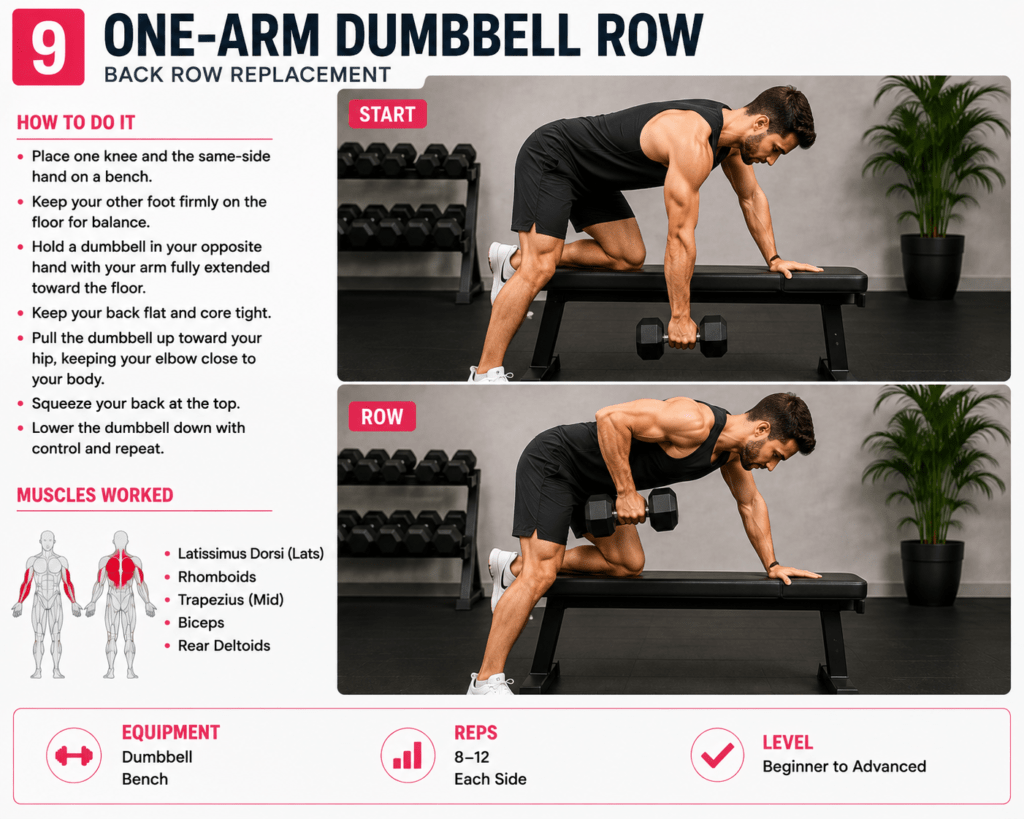
9. Seated Cable Row → One-Arm Dumbbell Row
Place one hand and knee on a sturdy chair or bench and row the dumbbell toward your hip.
Main muscles: Back, lats, traps, rhomboids
Suggested reps: 8–12 per arm
Keep your torso stable and avoid twisting as you pull.
Shoulders & Arms
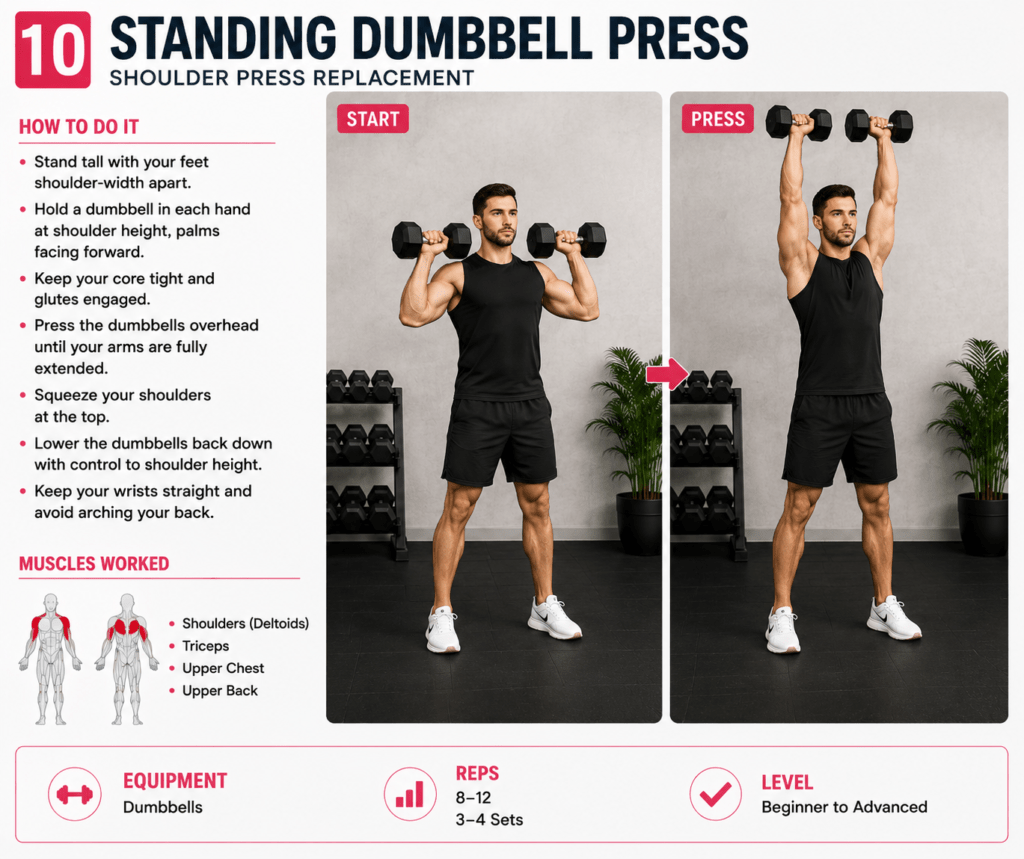
10. Shoulder Press Machine → Standing Dumbbell Press
Hold a dumbbell in each hand at shoulder level and press them overhead.
Main muscles: Shoulders, triceps
Suggested reps: 8–15
Keep your core engaged and avoid excessive arching of your lower back.
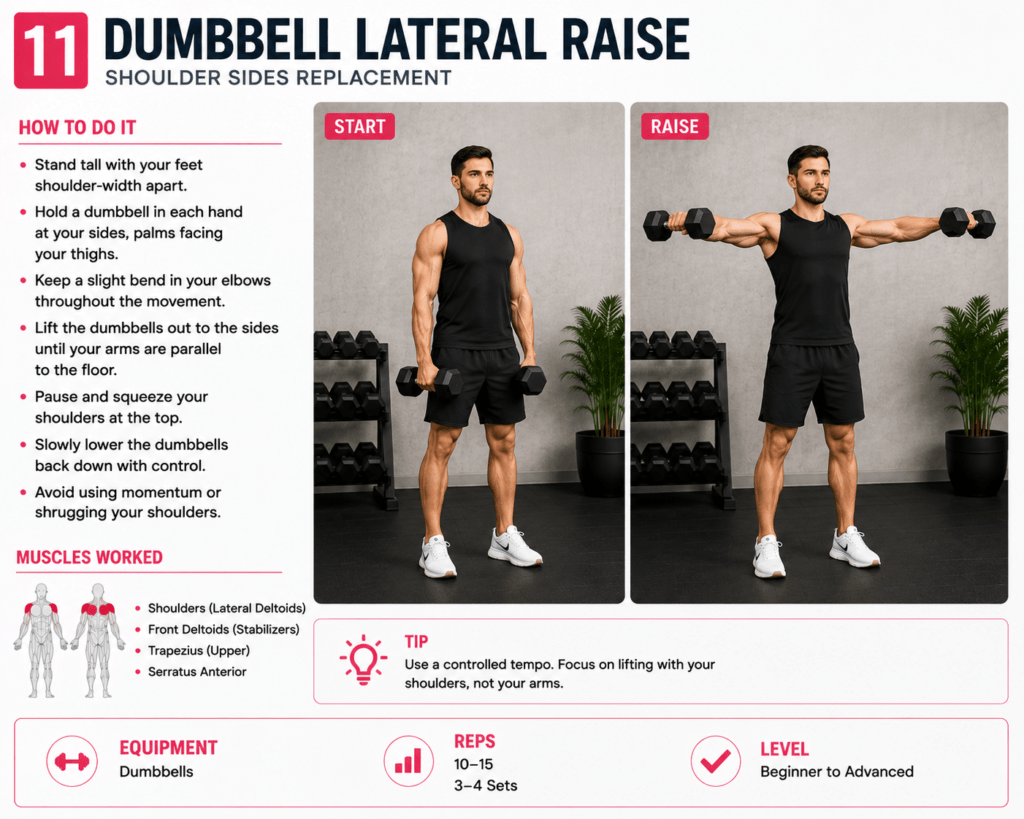
11. Lateral Raise Machine → Dumbbell Lateral Raise
Stand upright with a dumbbell in each hand and raise your arms out to the sides.
Main muscles: Side deltoids
Suggested reps: 12–20
This is one exercise where lighter dumbbells are often better. Control the movement instead of swinging the weights.
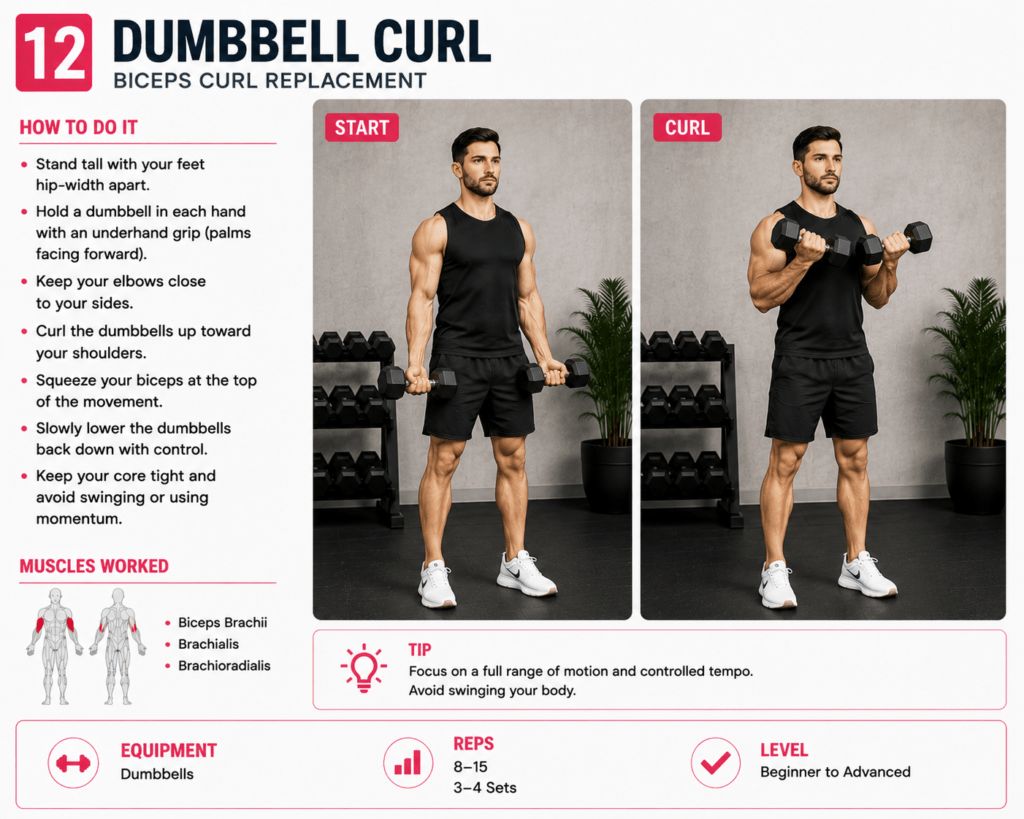
12. Biceps Curl Machine → Dumbbell Curl
Hold a dumbbell in each hand and curl the weights toward your shoulders.
Main muscles: Biceps
Suggested reps: 8–15
Keep your elbows relatively close to your body and avoid using momentum.
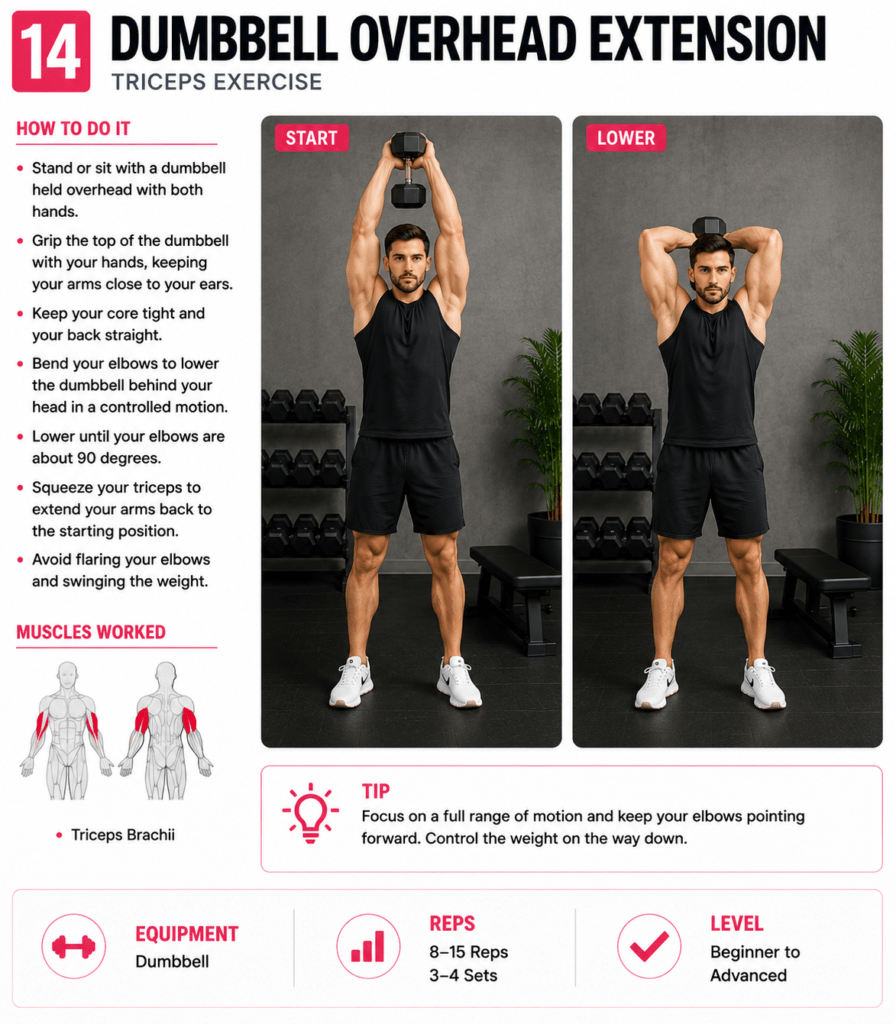
13. Triceps Pushdown → Dumbbell Overhead Extension
Hold one dumbbell overhead with both hands, lower it behind your head, and extend your arms back up.
Main muscles: Triceps
Suggested reps: 10–15
Keep your elbows pointing generally forward and use a controlled range of motion.
Calves, Lower Back & Core
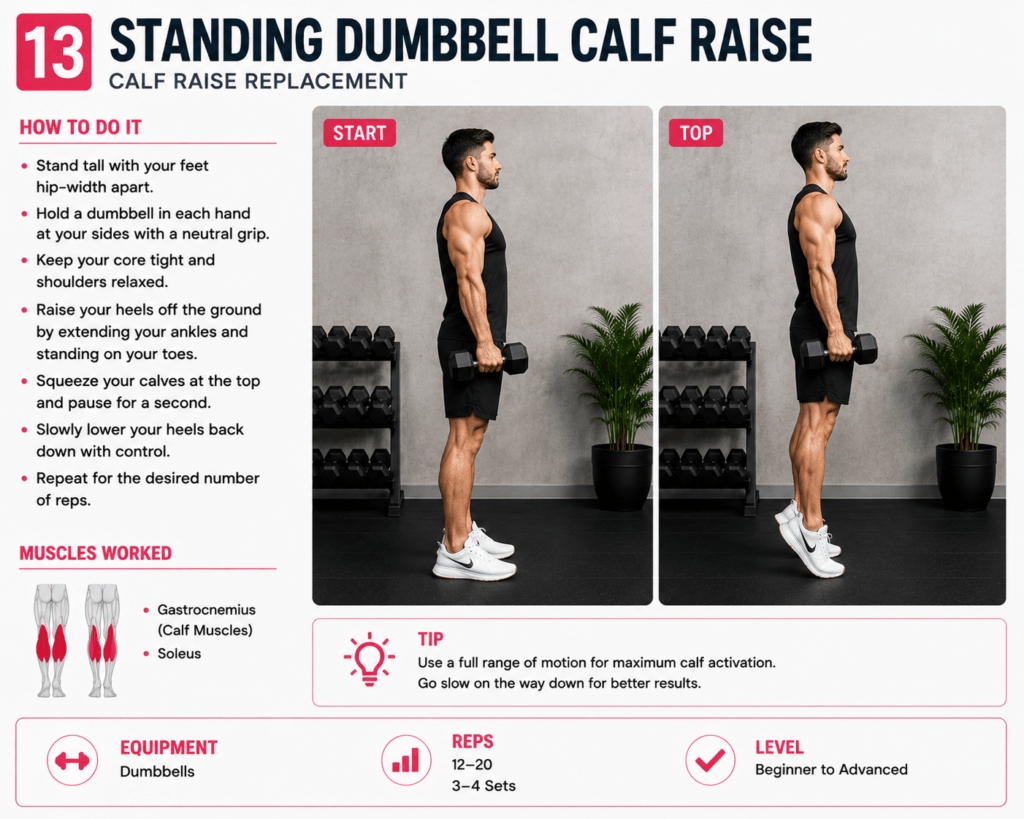
14. Calf Raise Machine → Standing Dumbbell Calf Raise
Hold dumbbells at your sides and rise onto your toes.
Pause briefly at the top before lowering your heels.
Main muscles: Calves
Suggested reps: 15–25
For a greater range of motion, you can perform the exercise with your heels slightly elevated on a stable step—but make sure you have something secure to hold onto.
15. Back Extension Machine → Dumbbell Romanian Deadlift
The dumbbell Romanian deadlift can also be used to train the posterior chain and lower-back musculature.
Main muscles: Hamstrings, glutes, lower back
Suggested reps: 8–15
The movement should come primarily from your hips. Keep your spine neutral throughout the exercise.
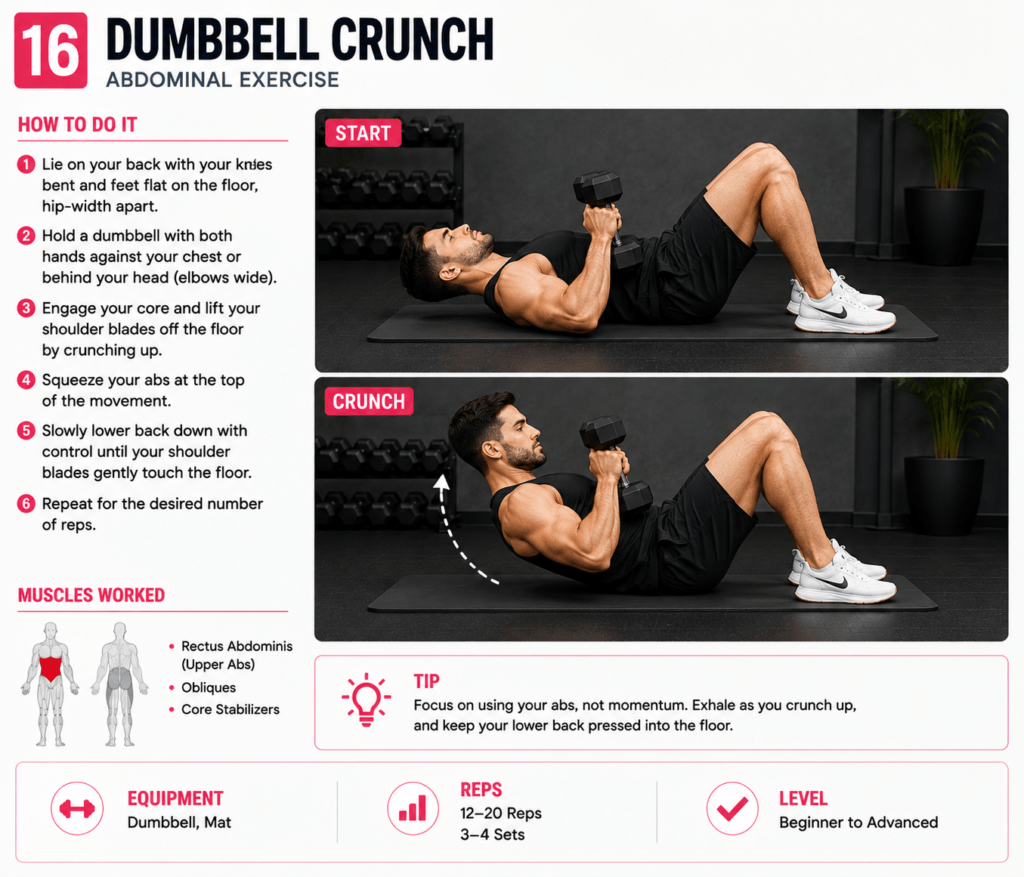
16. Ab Machine → Dumbbell Crunch
Lie on your back with your knees bent and hold a light dumbbell against your chest or above your upper body.
Perform a controlled crunch.
Main muscles: Abdominals
Suggested reps: 15–20
Don’t pull on your neck. Focus on bringing your rib cage toward your pelvis.
How to Build a Full-Body Dumbbell Workout
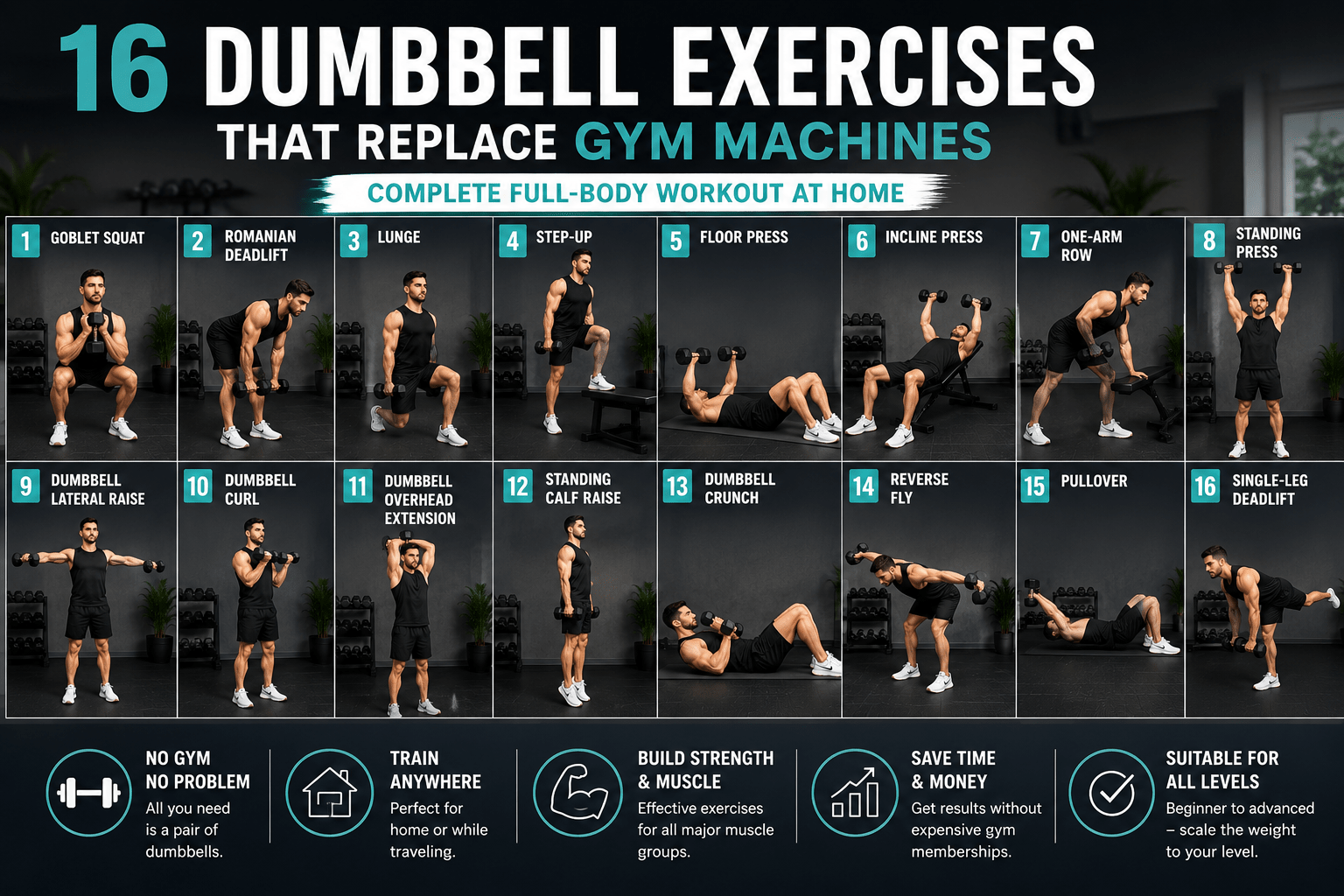
You don’t need to perform all 16 exercises in one session.
Instead, choose 3–4 exercises covering different muscle groups.
For example:
Full-Body Home Workout
1. Goblet Squat
3 sets × 8–15 reps
2. Dumbbell Romanian Deadlift
3 sets × 8–15 reps
3. Dumbbell Floor Press
3 sets × 8–15 reps
4. One-Arm Dumbbell Row
3 sets × 8–12 reps per arm
5. Standing Dumbbell Press
2–3 sets × 8–15 reps
6. Dumbbell Crunch
2–3 sets × 15–20 reps
Train around 3–5 times per week, depending on your overall training volume, recovery, and fitness level.
How Heavy Should Your Dumbbells Be?
Choose a weight that challenges you while allowing you to maintain good technique.
A useful rule is that the final few repetitions of a set should feel difficult, but you should still be able to complete them with controlled form.
You don’t need extremely heavy dumbbells to make progress.
You can increase difficulty by:
- Increasing the dumbbell weight
- Adding repetitions
- Adding sets
- Slowing the lowering phase
- Using a larger range of motion
- Performing unilateral exercises
- Improving your technique
This is called progressive overload, and it is one of the most important principles for getting stronger.
Dumbbells vs. Gym Machines
Dumbbells and machines both have advantages.
| Dumbbells | Gym Machines |
|---|---|
| Train stabilizing muscles | Provide more stability |
| Require little equipment | Usually require more equipment |
| Can be used at home | Usually require a gym |
| Allow flexible movement | Guide the movement |
| Easy to store | Take up more space |
| One pair can train the whole body | Different machines target specific movements |
The goal isn’t to prove that dumbbells are “better” than machines.
The goal is to understand that a lack of gym equipment doesn’t have to stop you from training.
Important Safety Tips for Home Workouts
Before starting, make sure you have enough clear space to move safely.
Use a sturdy chair or sofa only when it is stable and designed to support your body weight.
Start with manageable weights and learn the movement before increasing the load.
Most importantly, don’t sacrifice technique just to lift heavier dumbbells.
If an exercise causes sharp or unusual pain, stop rather than trying to push through it.
You Don’t Need a Gym to Get Stronger
A gym can be convenient, motivating, and useful—but it isn’t a requirement for effective resistance training.
With dumbbells, consistency, progressive overload, and good technique, you can create a surprisingly complete home training program.
You can squat, hinge, press, pull, raise, curl, extend, and train your core with just a few pieces of equipment.
The gym is optional. Consistency isn’t.